Did St. George Pass a New Sales Tax? Quick Answer
Yes. On October 1, 2026, the St. George City Council adopted a 0.33% emergency services sales tax. That's 33 cents on every $100 of taxable purchases. The city expects it to raise about $12 million a year for fire service and to cost the average household about $56 a year. The version that passed also gives primary residential utility customers a rebate of about $40 a year. The tax ends after 10 years unless the council renews it.
A Vote That Failed, Then Passed
The first motion failed 2-3, after an hour-long public hearing where most speakers opposed the tax. Councilmembers Danielle Larkin, Michelle Tanner and Austin Anderson voted no; Steve Kemp and Natalie Larsen voted yes.
A few minutes later, Larkin brought back a revised motion that restored a utility offset, paid for by a $1.35 million reimbursement from the general fund to the city's utility funds. "I would like to be able to vote for this, but I would like for us to add that back in," Larkin said. The revised motion passed 3-2, with Kemp, Larsen and Larkin in favor and Tanner and Anderson opposed.
| Detail | What passed |
|---|---|
| Rate | 0.33% (33 cents per $100 of taxable purchases) |
| Expected revenue | About $12 million per year |
| Average household cost | About $56 per year |
| Utility rebate | About $40 per year for primary residential utility customers |
| Sunset | 10 years unless the council reauthorizes it |
| Takes effect | Earliest date state law allows after notice to the Utah State Tax Commission |
What the Money Pays For
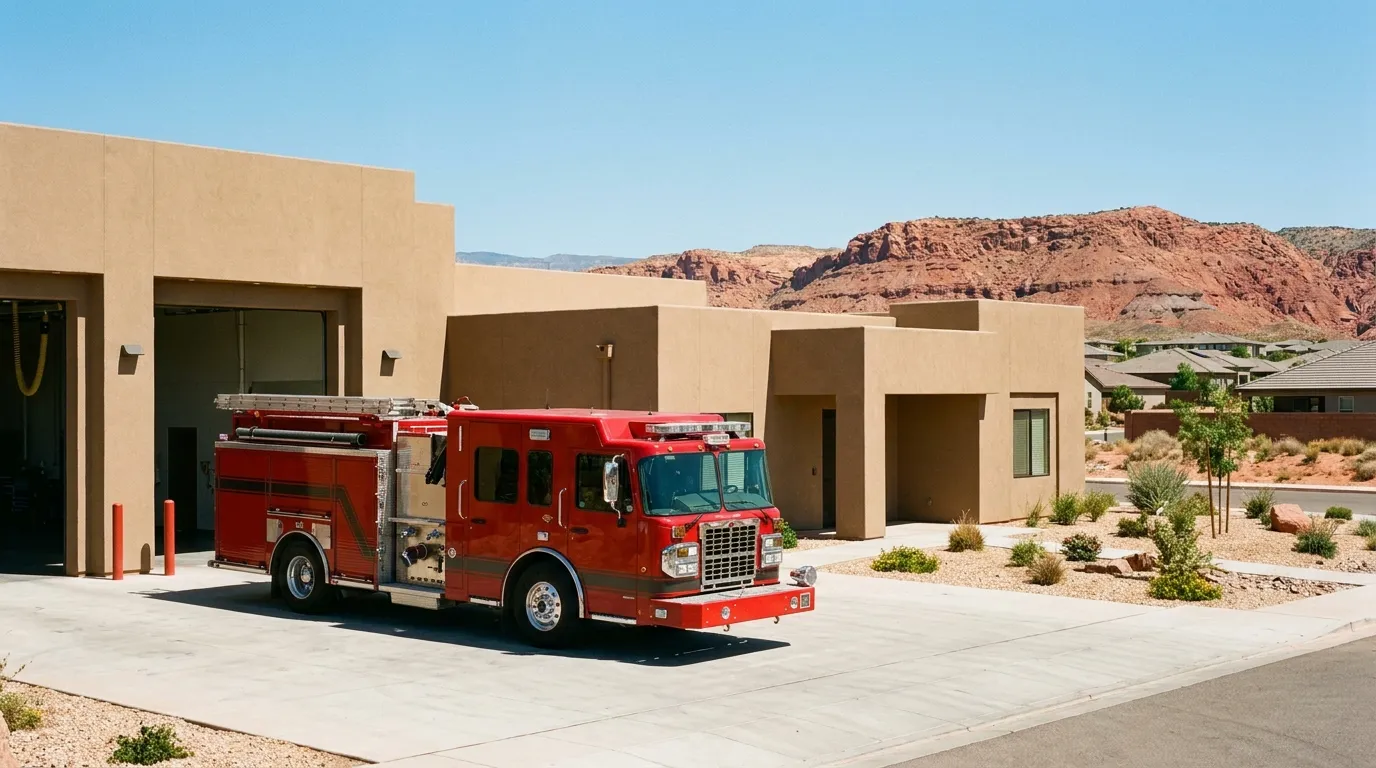
The plan calls for six additional full-time fire stations, 72 additional full-time firefighters and 15 pieces of fire apparatus. "We have two new fire stations we'd like to build," Mayor Jimmie Hughes said. The rest of the plan moves stations that are only partly staffed today to full-time crews.
Fire Chief Robert Stoker told the council that response times have "trended up" since 2012 because of "congestion, growth and all those things." According to the city's data, about 35% of calls were more than 1.5 miles by road from a full-time fire station. That's no surprise in one of the fastest-growing metro areas in the country; see our Washington County population growth report.
Mayor Hughes also talked about public safety and growth in his 2026 State of the City address.
Neighboring Cities Are Asking Voters
St. George's council adopted the tax on its own, and two neighbors are putting the same question to voters on November 3. Santa Clara is asking about a sales tax of up to 1.0% for emergency services. Washington City is asking about an additional 0.67% emergency services tax, for 1.0% in total, and the council there has said it would cut the city's property tax share by half if it passes. Dates, drop boxes and the full ballot are in our Washington County 2026 election guide.
What It Means for Shoppers and Businesses
The tax applies to taxable retail sales inside St. George city limits. On a $100 dinner, it adds 33 cents. Shops and restaurants in the city will need to update their point-of-sale systems once the Utah State Tax Commission publishes the new combined rate and effective date. The city hasn't announced the combined rate yet, and we'll add it here when it's published. Local businesses can find accountants and bookkeepers in our financial services directory.
Frequently Asked Questions
Did St. George raise its sales tax?
Yes. On October 1, 2026, the St. George City Council voted 3-2 to adopt a 0.33% emergency services sales tax. That's 33 cents on every $100 of taxable purchases. It takes effect on the earliest date state law allows after the city notifies the Utah State Tax Commission.
How much will the St. George emergency services tax cost?
The city expects it to raise about $12 million a year and to cost the average household about $56 a year. The version that passed also gives primary residential utility customers a rebate of about $40 a year.
What will the St. George sales tax pay for?
Fire service. The plan calls for six additional full-time fire stations, 72 more full-time firefighters and 15 pieces of fire apparatus. Mayor Jimmie Hughes said the city has two new fire stations it wants to build.
Is the St. George emergency services tax permanent?
No. It expires after 10 years unless the city council reauthorizes it.
Source: St. George News, "St. George emergency services tax passes 3-2 after failing minutes earlier"; Washington County 2026 sample ballot.