Does It Snow in St. George, Utah?
St. George sits at roughly 2,860 feet of elevation in Utah’s Mojave Desert transition zone, which is why its winters look almost nothing like the rest of Utah. While Salt Lake City and the Wasatch Front routinely see 60 inches of snow per winter and the ski resorts north of I-70 average 300 to 500 inches, St. George rarely sees more than a dusting that sticks for half a day.
How Often Does It Snow in St. George?
On average, St. George experiences 2 to 4 measurable snow events per winter. Most of these produce trace amounts to 1 inch, and the snow typically melts within a few hours of sunrise. Total annual snowfall averages about 3 inches, though some winters see no measurable accumulation at all and others (rarely) produce a single 6 to 10 inch event that becomes a local talking point.
Snow is most likely between mid-December and mid-February. November and March can produce snow during cold snaps, but it’s uncommon. October and April snow events occur once a decade if at all.
St. George Winter Temperatures
December: Average high 56°F, average low 30°F
January: Average high 54°F, average low 28°F — the coldest month
February: Average high 59°F, average low 31°F
Daytime highs in the 50s mean that even when overnight lows drop below freezing, anything that fell as snow tends to melt by mid-morning. Hard freezes that last for 24 hours straight happen only a few times per winter and are noteworthy when they do.
Why Doesn’t St. George Get Snow Like the Rest of Utah?
Three reasons:
1. Elevation. At 2,860 feet, St. George sits about 2,500 feet lower than Salt Lake City and 5,000 feet lower than Park City. Air temperature drops roughly 3.5°F per 1,000 feet of elevation, so St. George is meaningfully warmer than the rest of Utah year-round.
2. Geography. The city is in the Mojave Desert transition zone, sheltered from the cold Pacific air masses that dump heavy snow on the Wasatch by the high plateaus to the north. Storms reaching St. George have usually lost most of their moisture.
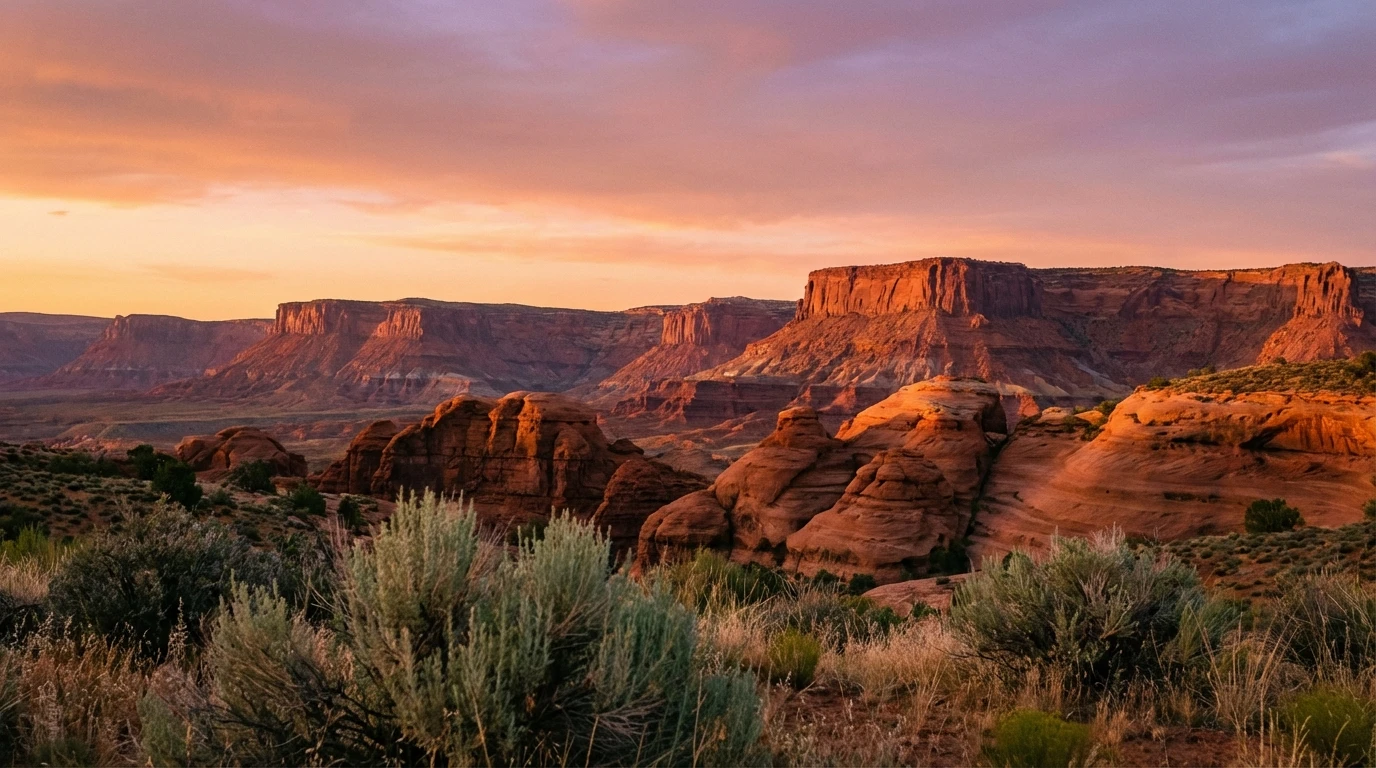
3. The red rock effect. Sandstone absorbs and re-radiates heat efficiently. The rust-colored canyons and bluffs around St. George keep the local microclimate several degrees warmer than open desert at the same elevation.
Where to Find Snow Near St. George
If you live in or are visiting St. George and you want to play in snow, you have to go up.
Brian Head Resort — roughly 90 minutes northeast of St. George at 9,600 feet, Brian Head averages over 350 inches of snow per season. It’s Utah’s highest-base ski resort and the closest skiing to St. George. Lift tickets are far cheaper than the Cottonwood Canyon resorts.
Cedar Breaks National Monument — about 75 minutes from St. George at 10,400 feet, Cedar Breaks closes its scenic drive in winter due to heavy snow but is spectacular for snowshoeing and Nordic skiing.
Pine Valley Mountain — the 10,300-foot peak northwest of St. George is the closest snow play area, often 30 to 40 minutes away depending on where you start. Look for sledding turnouts off the main road in winter.
Zion National Park’s upper elevations — the rim and Kolob Canyons sections of Zion often have snow in winter even when the valley floor is bare. The drive into Kolob is one of the easiest snow drives near St. George.
Is St. George Warm Enough for a Winter Vacation?
Yes — that’s the entire premise of St. George’s snowbird economy. Winter visitors from Idaho, Montana, Wyoming, Canada, and the northern US arrive in October and stay through April. Daytime highs in the 50s and 60s mean that hiking, golf, pickleball, and outdoor dining are all comfortable. Things to do in St. George in winter look similar to summer minus the extreme heat.
The exceptions: very early mornings (before 9 AM) and evenings after sunset can be cold enough to want a jacket and gloves. Zion National Park at lower elevations stays accessible year-round and is significantly less crowded in winter than in summer.
What to Pack for St. George in Winter
Layers. The diurnal swing in St. George winter can be 25 to 30 degrees between overnight low and afternoon high. A typical January day might start at 28°F and reach 56°F by 2 PM. Bring a light puffy or fleece for mornings and evenings, a light wind layer, hiking clothes for the warm afternoon, and a hat for cold mornings. Real winter gear (down parka, heavy boots) is overkill unless you’re heading up to Brian Head or Cedar Breaks for the day.
Snow FAQ
Has it ever snowed heavily in St. George? Yes, but rarely. Notable events include the December 2008 storm that produced about 8 inches and the January 2021 cold snap. Storms producing 4+ inches happen roughly once every 5 to 8 years.
Does it snow in Hurricane and Washington, Utah? Similar climate to St. George — rare, light snow that melts quickly. Hurricane sits slightly higher (3,260 ft) and gets marginally more cold weather but still averages well under 5 inches per year.
What about Cedar City? Cedar City at 5,800 feet has a real winter. Annual snowfall averages 40 to 50 inches and overnight temperatures regularly drop into the teens. Plan for winter driving conditions if heading there from St. George December through February.
When is the best month to visit St. George? March through May and October through November have the most pleasant temperatures. December through February is the slowest tourist season — great if you want red rock to yourself, but expect cold mornings.
Are St. George roads safe in winter? Yes. Roads ice over only briefly during the rare snow event, and the city clears main routes quickly. The bigger winter driving risk is traveling north on I-15 toward Cedar City or on Highway 9 toward Zion — both gain significant elevation and can have winter conditions when St. George is dry.
Planning a winter trip? Check our things to do in St. George guide for cold-weather activities, our restaurant guide for indoor dining, and our winter visitor guide for snowbird-specific tips.