
What Is Utah Tech's NIH Grant? Quick Answer
Utah Tech University received its first-ever National Institutes of Health research grant on October 7, 2026: $1,010,605 to study 4H leukodystrophy, a rare childhood neurological disorder. The principal investigator is Dr. Hung-Yu Shih, an assistant professor of biology in St. George. The award came through the NIH's R01 review process as an RF1, an R01-equivalent that funds several years of work up front. The university says it is the kind of award usually associated with large research universities, not a regional polytechnic with an undergraduate-focused science program.
The Disease and the Research
4H leukodystrophy affects how a child's brain develops and how it forms myelin, the insulating sheath around nerve fibers. The disorder also disrupts dental development and sex hormone production. There is no effective treatment. The disease is linked to defects in the POLR3 family of genes, and Dr. Shih's lab is using zebrafish, a standard model organism because its embryos are transparent and develop quickly, to work out how shortfalls in several POLR3 genes drive the disease and how it progresses.
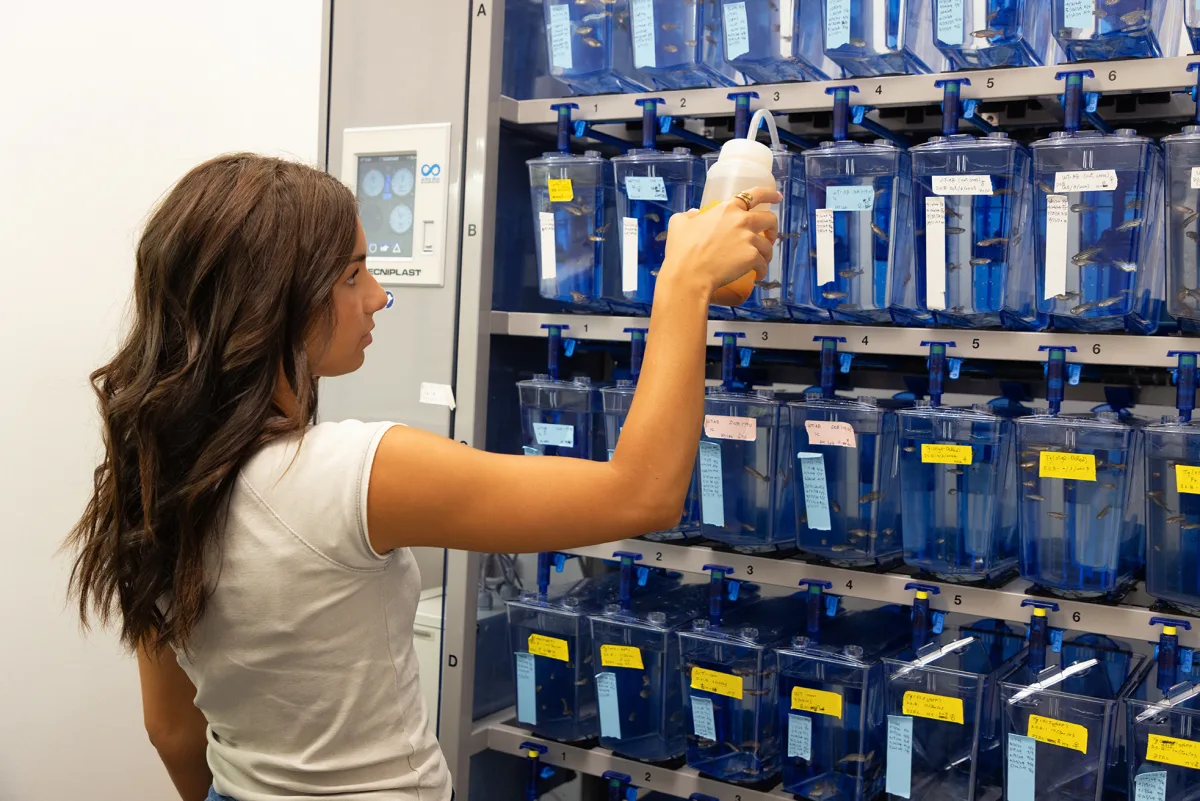
The project combines genetics, CRISPR genome editing, functional genomics and bioinformatics, and includes a small-molecule screen: testing libraries of compounds in the fish to flag any that improve the condition, which would be candidates for future therapies. The photo at the top of this page, from the university, shows the lab's zebrafish tank system.
Why It Matters for St. George
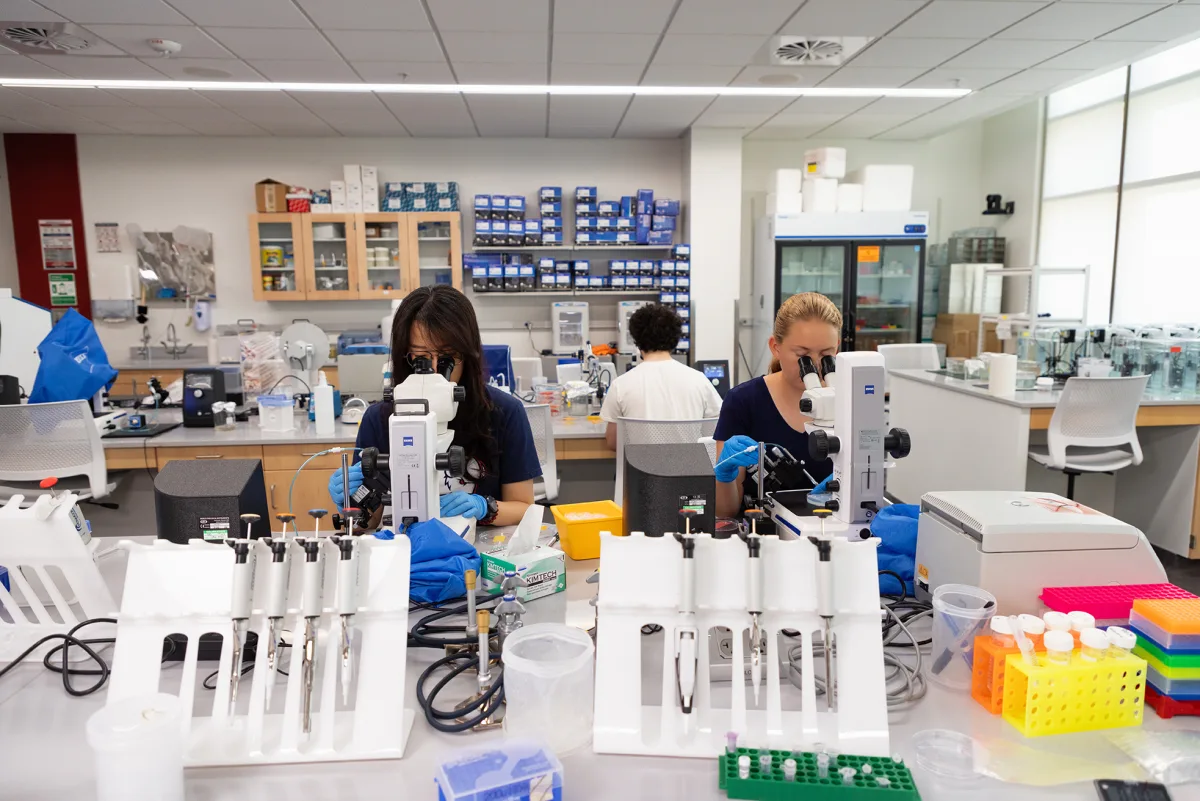
The grant's biggest local effect is on students. Undergraduate and graduate students work in the lab alongside faculty and get hands-on time with genome editing, molecular biology, data analysis and scientific writing. "One of the most exciting aspects of this award is the opportunity it creates for our students," Shih said in the university's announcement. Utah Tech President Shane B. Smeed said the funding "affirms the quality of work" at the university, and Dr. Donald Plumlee, dean of the College of Science, Engineering and Technology, noted that "traditionally, this level of NIH award is associated with large research-intensive universities."
The university credits several local and state partners with building the lab to the point where it could compete for federal money: the Atwood family, who helped establish the research infrastructure; the Adelmarie Murphy Fellowship and the Paula and Rich Jardine Fellowship in Functional Genomics and Bioinformatics, which fund student researchers; and Talent Ready Utah's Deep Tech Talent Initiative, a Utah System of Higher Education program that Vic Hockett, its associate commissioner, said "made this success possible." Utah Commissioner of Higher Education Geoff Landward called the award "an example of the innovation coming from our regional institutions."
For a city whose economy has long leaned on tourism, construction and retirees, a federally funded biomedical lab is a different kind of asset. It gives science graduates a reason to stay in St. George, and it adds to the research footprint that has been growing alongside the hospital system and the university's engineering programs. Our Southern Utah education guide and healthcare guide cover the institutions involved, and the Utah Tech University listing has campus details.
What Happens Next
RF1 awards fund multiple years of work in a single disbursement, so the lab has runway without annual renewals. Families affected by 4H leukodystrophy should know this is basic research in fish, not a clinical trial, and any treatment is years away. Students interested in the lab can contact the biology department through the university. Utah Tech also announced in September that its mechanical and electrical engineering programs hold ABET accreditation, and the university's annual Boost entrepreneurship conference and Homecoming week are both on the fall calendar.
Frequently Asked Questions
How much is Utah Tech's NIH grant?
$1,010,605, awarded in October 2026 as an RF1, an R01-equivalent award that provides multiple years of funding up front. It is the first NIH research grant in the university's history.
What is 4H leukodystrophy?
A rare childhood neurological disorder tied to defects in POLR3 genes. It affects brain development and myelin formation, as well as dental development and sex hormone production. There is currently no effective treatment.
Who leads the research at Utah Tech?
Dr. Hung-Yu Shih, assistant professor of biology, is the principal investigator. Undergraduate and graduate students work in the lab using zebrafish, CRISPR genome editing, bioinformatics and small-molecule screening.
Source: Utah Tech University, "UT receives National Institutes of Health flagship research grant" (Oct. 7, 2026). Photos courtesy of Utah Tech University.